We often get asked: "You guys are well-educated, technical people… why
step into the so-called dirty field of plastic recycling?"
The answer is not a business plan —— It's a story.
We never thought we'd end up here. Honestly, plastic recycling was never part
of the plan. We were three technical guys with strong backgrounds in chemistry and marketing,
well-settled in our careers, working on things that looked "cool" on paper —— technology,
machines, engineering solutions. Recycling, to us, sounded messy, smelly, and far removed from
the kind of work we ever thought we would do.
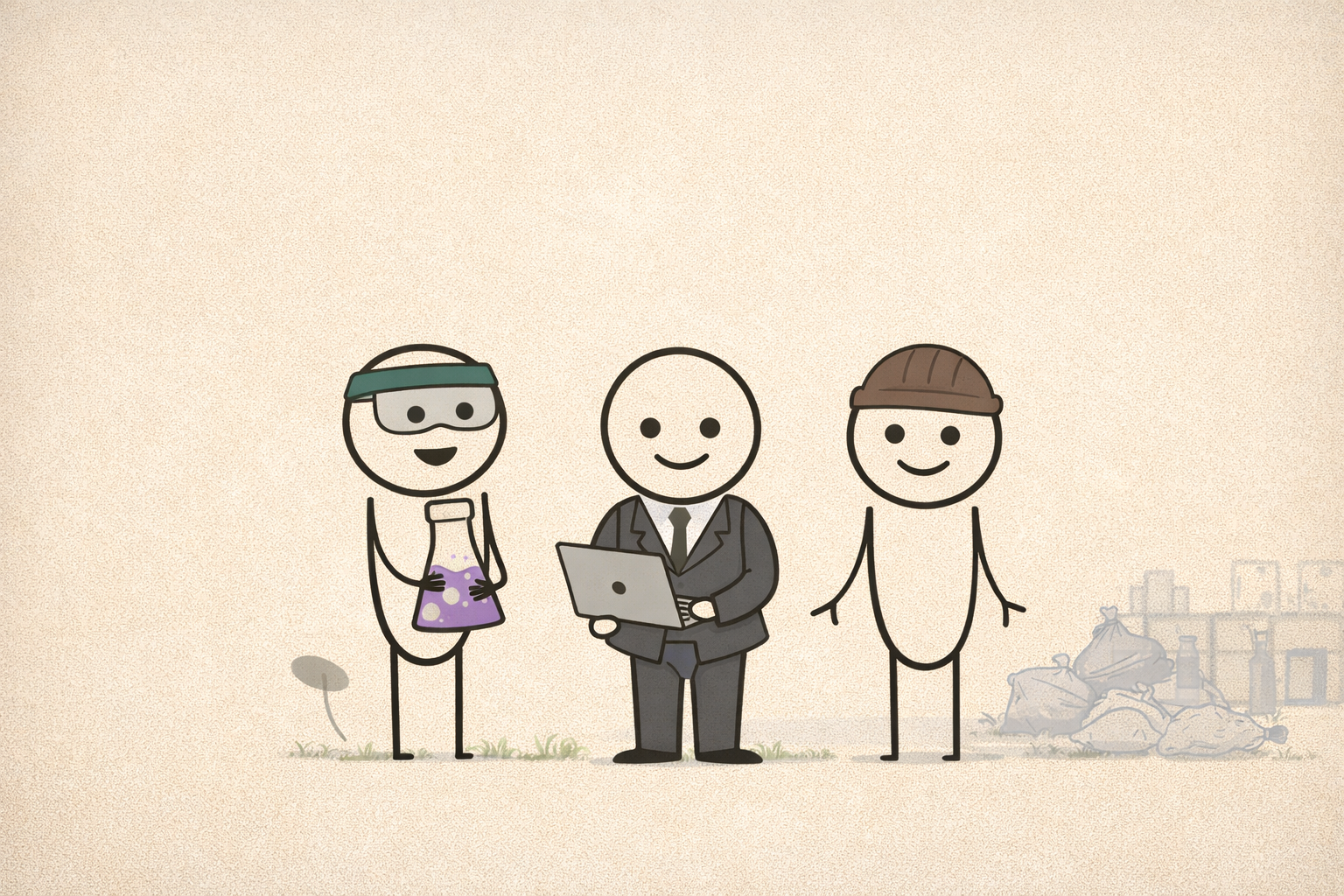
Three technical minds — one unexpected path
But life has a strange way of pulling you
in the direction you're meant to go.

For us, it all started during the "ban plastic" wave.
Everywhere we went, the conversation was the same — plastic is bad, plastic must go. We joined
in too. We even spoke at events and supported the cause. We felt proud that our words were
inspiring people.
And then it happened. A little girl, maybe in the 3rd or 4th standard, came up
to us after one of these awareness talks. She said:
Girl: "Uncle, you told us not to use
plastic bags. Okay, I won't. But then what should I use instead?"
Us: "Use paper or cloth bags, beta."
"But uncle, our teacher says cloth is also made from plastic
fibers. And for paper, won't we need to cut more trees? How is that saving the environment?"
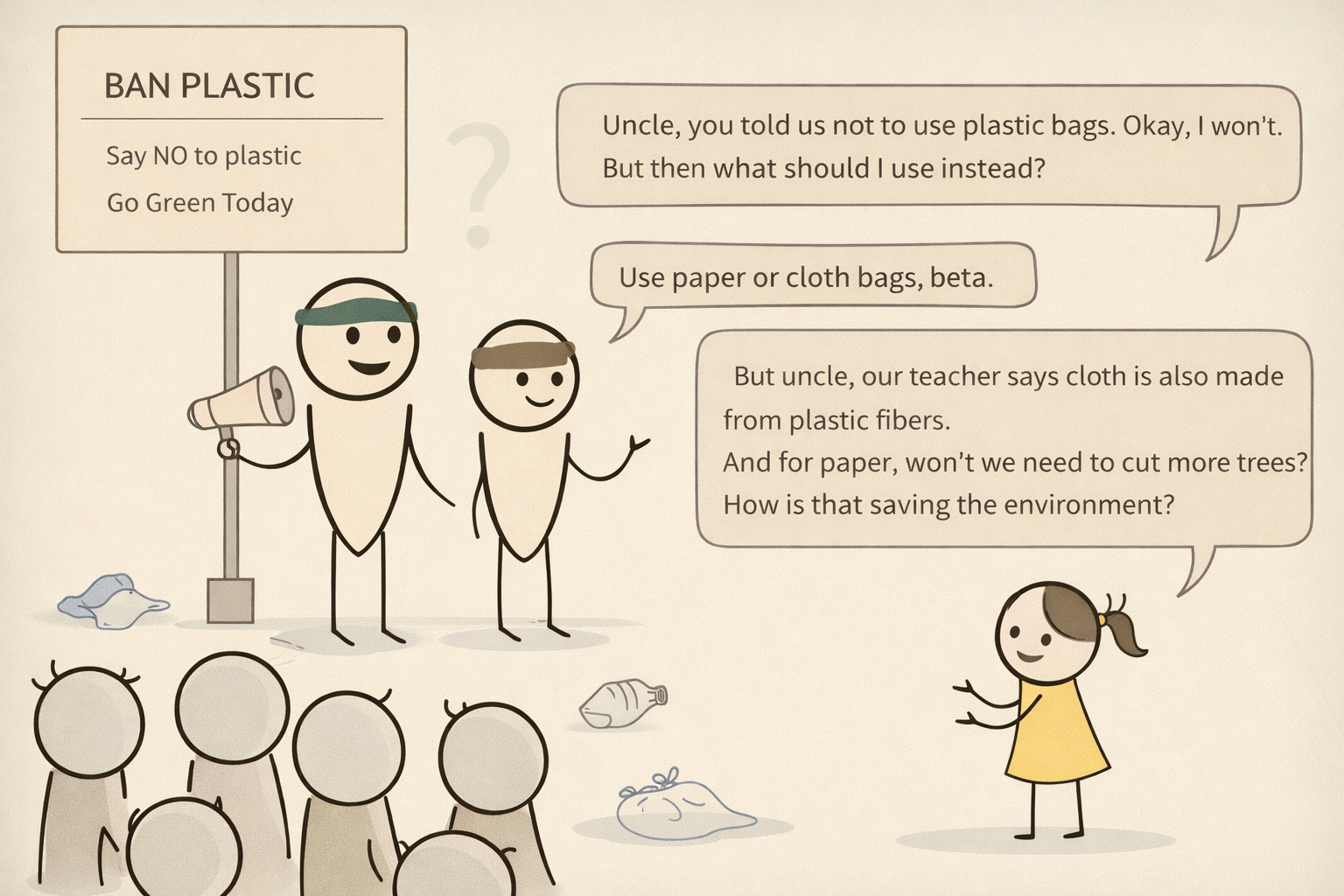
"How is that saving the environment, Uncle?"
That one innocent question hit us harder than any lecture or report. On the spot, we realized — we
didn't really have the answers. We were just repeating what everyone else was saying.
That night, we sat together and started questioning ourselves. Around us, almost everything was plastic
— the chair, the fan, the TV, the phone, the pen in our pocket. Nearly 80% of our daily life was
plastic.
So we asked ourselves: If we remove plastic, what's the alternative? Wood? But one tree takes 10–15
years to mature. If we cut it down to make chairs, tables, pens, and more — are we really saving the
environment? The math didn't add up.
?
A child's question we couldn't answer
🌍
80% of daily life is plastic — ban it all?
💡
The aha moment — it doesn't vanish, so recycle it
And then came the "aha" moment.
Plastic, unlike wood, doesn't just disappear. It doesn't degrade quickly. And
that's not a curse — it's actually an opportunity. Because if it doesn't
vanish, it means it can be recycled again and again. Maybe hundreds of times.
That spark turned into a mission. With our chemical knowledge, we started
experimenting on plastics that were considered "impossible to recycle." We
experimented, failed, succeeded, and eventually started doing what others thought couldn't be
done — giving new life to plastics.
Together, we realized that recycling isn't a "dirty job" — it's the future.
That's how Garbag Rebits was born.
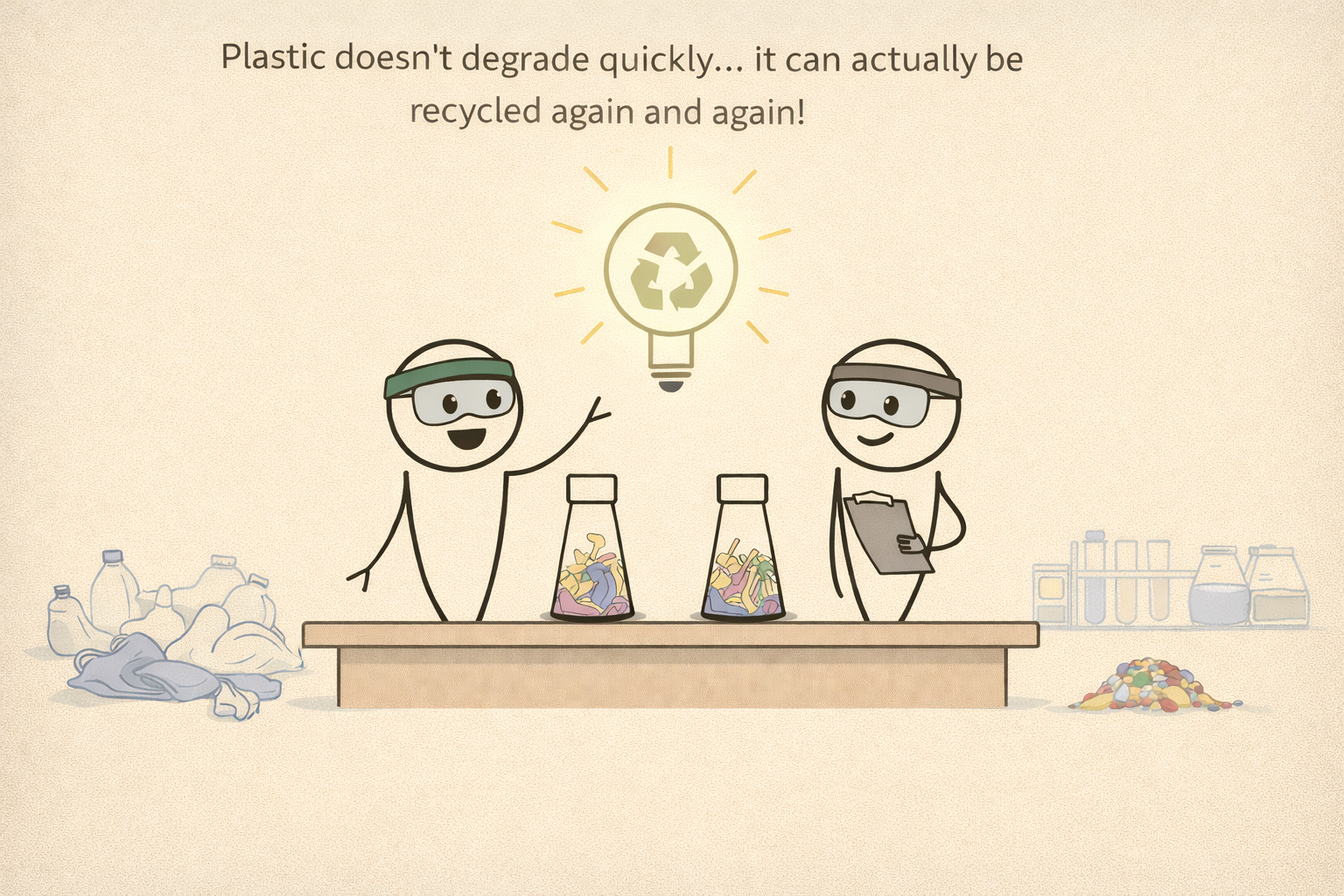
Chemistry + curiosity + courage = a new beginning
We decided to step into the so-called "dirty field" —
not because it was glamorous,
but because it was necessary.
We wanted to prove that plastic itself is not the enemy — the
way we handle it is. It's not about banning plastic, it's about managing it intelligently.
We didn't plan this journey. We didn't dream of being recyclers. But sometimes
the best journeys are the ones that find you. Ours started with a child's question — and today,
it's shaping the way we look at the future of plastics.
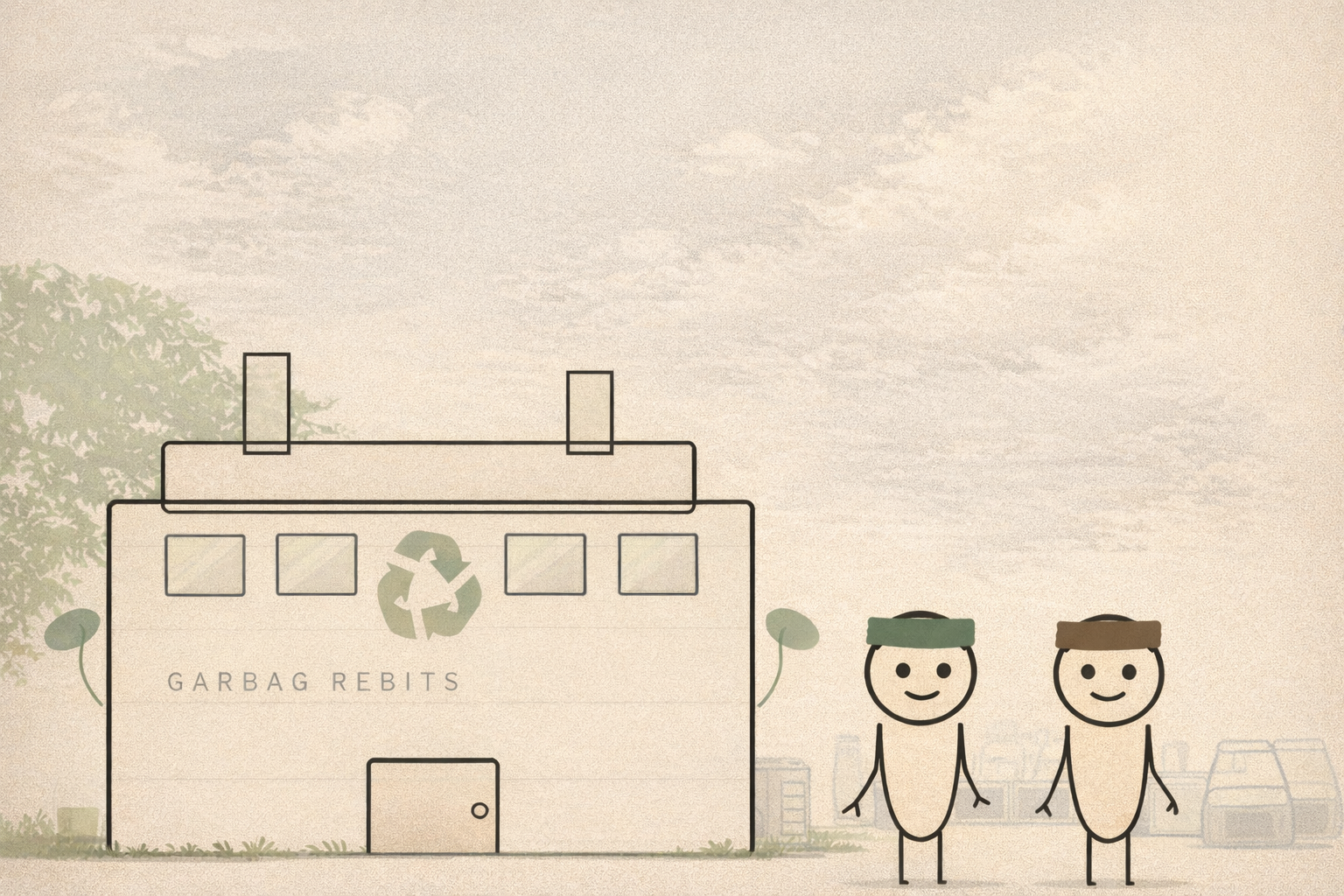
Garbag Rebits: A Journey from Discarded to Desired
Today, Garbag Rebits stands for one simple belief:
Plastic is not a problem. Our mindset is.
If we use it responsibly, recycle it smartly,
and stop treating it as waste —
plastic can be a resource, not a burden.
Join Our Story
It started with one question. It continues with you.
.png)